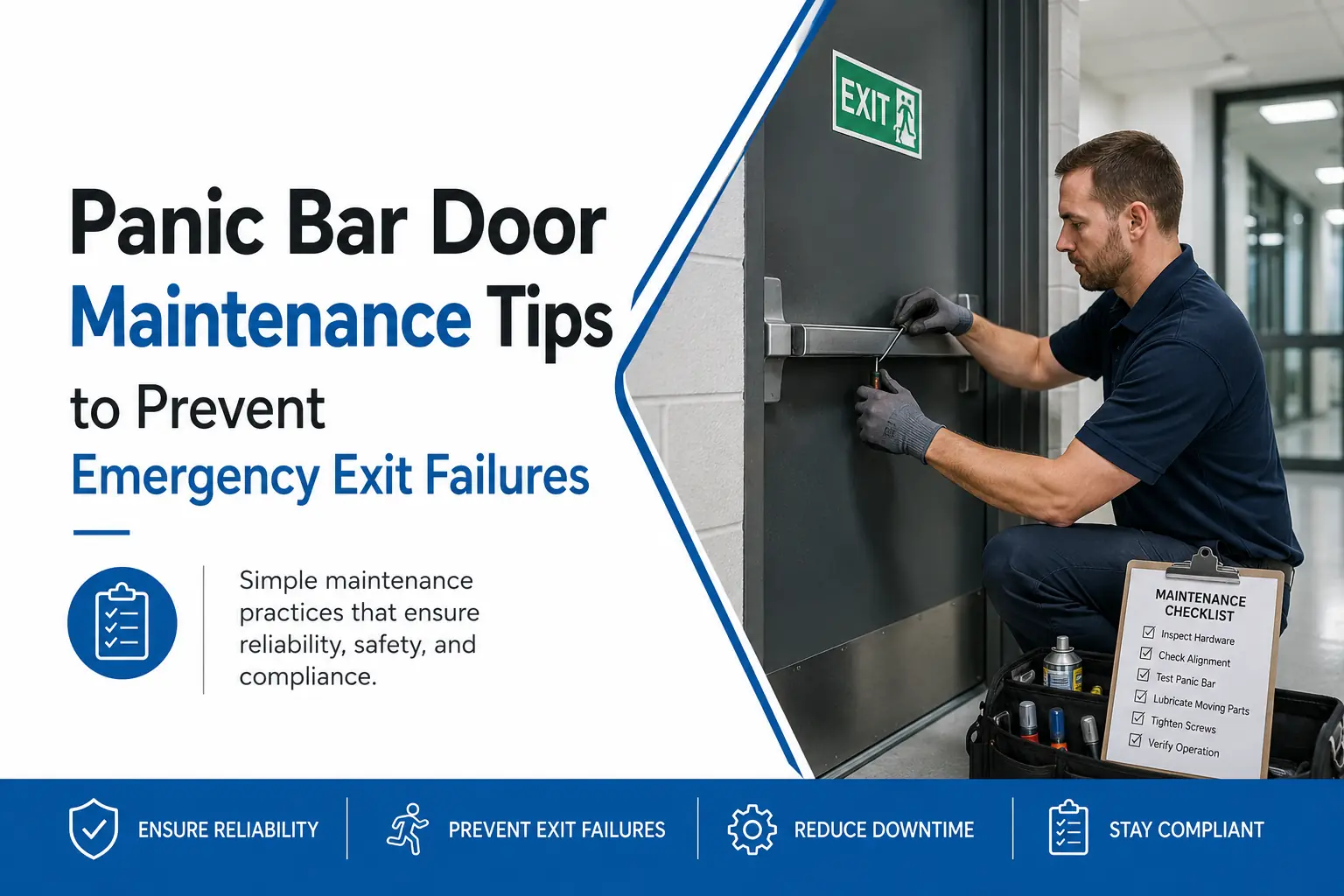

Proper panic bar door maintenance tips are essential for keeping commercial buildings safe, compliant, and ready for emergencies. A malfunctioning panic bar can block evacuation routes, violate building codes, and put lives at risk. In busy facilities where commercial doors must function flawlessly under pressure, even minor issues in panic hardware can lead to serious emergency exit failures. This guide explains how panic bar systems work, common maintenance practices, and why professional servicing from Dallas Affordable Locksmiths ensures long-term safety and compliance.
For business owners and facility managers, understanding panic hardware is not optional it is required under International Building Code (IBC requirements) and life safety standards such as NFPA 101. Many buildings with occupant load of 50 or more must install approved exit devices that allow fast evacuation for 100 people or more in assembly or educational occupancies.
What Causes Panic Bar Door Failures in Commercial Buildings
Panic bar systems, also known as panic exit devices, are designed to allow fast egress by simply pushing a push panic bar. However, these systems fail due to several common issues:
- Dust and debris accumulation that attract dust inside latch mechanisms
- Misaligned strike plates preventing proper latching
- Loose or damaged mounting screws
- Improper panic bar installation and repair
- Wear on internal springs and panic door latch components
- Failure to meet updated building code requirements
According to Wikipedia – Panic Bar, these devices are designed for fast emergency exit, but only work correctly when properly maintained and tested.
Learn more about securing your facility through a commercial security guide.
DIY Panic Bar Maintenance Methods (What You Can Do Safely)
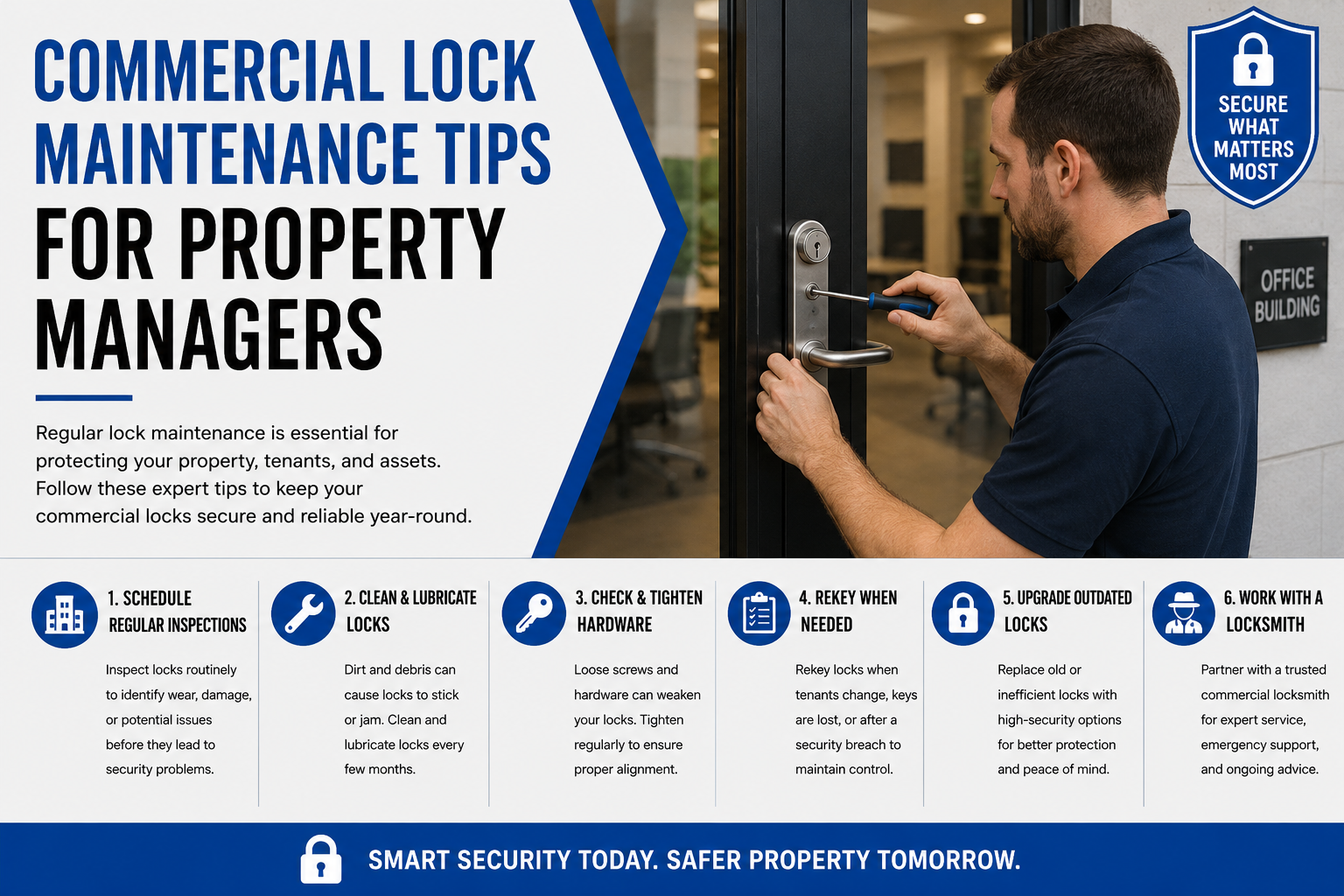
Some basic maintenance tasks can be performed without specialized tools. These panic bar door maintenance tips help improve performance temporarily:
Basic DIY Steps
- Clean exterior panic bar surfaces to remove dust buildup
- Check if the bar fully latches properly when closed
- Inspect visible screws for tightening issues
- Test push function regularly on panic bars for doors
- Apply light lubrication to moving components (non-corrosive only)
Routine inspection ensures early detection of wear before full failure occurs in fire rated emergency exits.
See how professionals handle lock systems in our lock types guide.
Why DIY Panic Bar Repair Often Fails
While DIY maintenance may seem cost-effective, it often fails due to technical and legal limitations. Panic hardware is regulated under strict IBC requirements and NFPA 101, especially in buildings with assembly educational occupancy or high foot traffic.
Here’s why DIY approaches fail:
- Incorrect adjustment of panic bar installation and repair systems
- Failure to meet building safety compliance standards
- Hidden wear in internal latch mechanisms
- Misinterpretation of panic bar requirements
- Improper handling of push pull force alignment
Professional inspection ensures compliance with international building code ibc and prevents costly violations.
Learn why professional service matters in our locksmith advice guide.
Risks of Cleaning Chemicals and Improper Maintenance
Using harsh chemicals near panic hardware can damage internal mechanisms. In facilities where electrical equipment or fire systems are present, chemical exposure may corrode metal components and weaken the panic bar latch.
Improper cleaning may also interfere with fire rated door assemblies, reducing emergency effectiveness during evacuation. Always avoid chemical buildup that can compromise panic exit devices.
For broader safety awareness, refer to Cornell University Fire Safety.
Signs You Need Professional Panic Bar Repair
If your system shows any of the following symptoms, professional service is required immediately:
- Panic bar does not fully release when pushed
- Door fails to latch properly after closing
- Visible damage to panic hardware
- Loose or missing mounting screws
- Delayed or stiff emergency exit response
These issues often indicate deeper structural or mechanical failure requiring expert panic bar repair.
Emergency support is available through emergency locksmith help.
Why Choose Dallas Affordable Locksmiths for Panic Bar Service
Dallas Affordable Locksmiths provides specialized commercial door solutions designed for compliance, safety, and reliability. Our technicians understand panic hardware, panic bar installation and repair, and code-driven requirements for all commercial buildings.
We service exterior panic bar systems in offices, schools, retail spaces, and industrial facilities across Dallas and nearby areas like Addison, Bedford, Murphy, and Lucas. Whether it is preventive maintenance or full system replacement, our approach ensures compliance with IBC requirements and NFPA 101.
Explore service coverage here: commercial locksmith services and local locksmith help.
FAQs About Panic Bar Maintenance and Repair
What is a panic bar?
A panic bar is a horizontal exit device installed on commercial doors that allows quick evacuation during emergencies. It releases the door when pushed, ensuring fast exit without keys or complex mechanisms, especially in high-occupancy buildings requiring strict safety compliance.
What are panic bar requirements?
Panic bar requirements depend on building codes like IBC and NFPA 101. They are required in buildings with large occupant loads, such as assembly or educational occupancies, where quick and safe exit is essential for 50 or more people.
How does panic bar repair work?
Panic bar repair involves inspecting internal latches, strike plates, and mounting screws. Technicians adjust alignment, replace worn parts, and ensure the system meets safety codes so the exit device functions smoothly during emergencies.
What is a panic door latch?
A panic door latch is the internal locking component that holds the door secure until the panic bar is pressed. It must function smoothly to ensure both security and fast emergency exit when needed.
Can panic bar installation fail DIY?
Yes, DIY installation often fails due to incorrect alignment, improper hardware selection, and violation of building codes. Professional installation ensures compliance with safety regulations and proper function under emergency conditions.
Are panic bars required for all doors?
No, panic bars are required mainly for commercial and high-occupancy buildings. Residential doors typically do not require them unless local building codes specify emergency exit requirements for specific structures.
Final Safety Recommendation
Maintaining emergency exits is not just routine upkeep it is a legal and life safety responsibility. Proper panic bar door maintenance tips ensure that your building remains compliant, functional, and safe during critical situations. However, when wear, misalignment, or code concerns appear, professional inspection becomes necessary.
For reliable service, schedule an inspection with Dallas Affordable Locksmiths or contact our emergency team through our Dallas service page. Whether you manage a single property or multiple facilities, ensuring your panic hardware works correctly is essential for protecting lives and meeting compliance standards.
When safety cannot wait, professional locksmith support ensures your exits are always ready when they matter most.