
Keeping a commercial property secure involves much more than locking the doors at the end of the day. Property managers are responsible for protecting tenants, employees, visitors, equipment, and valuable assets. One of the most effective ways to do that is by following a commercial lock maintenance checklist that keeps every locking system working properly throughout the year.
Commercial locks experience constant use. Office buildings, retail stores, apartment complexes, warehouses, healthcare facilities, and industrial properties may have dozens or even hundreds of people using the same entrances every day. Over time, this frequent use causes wear on internal components, reducing both performance and security. Without routine commercial lock maintenance, small issues can quickly turn into expensive repairs or complete lock failures.
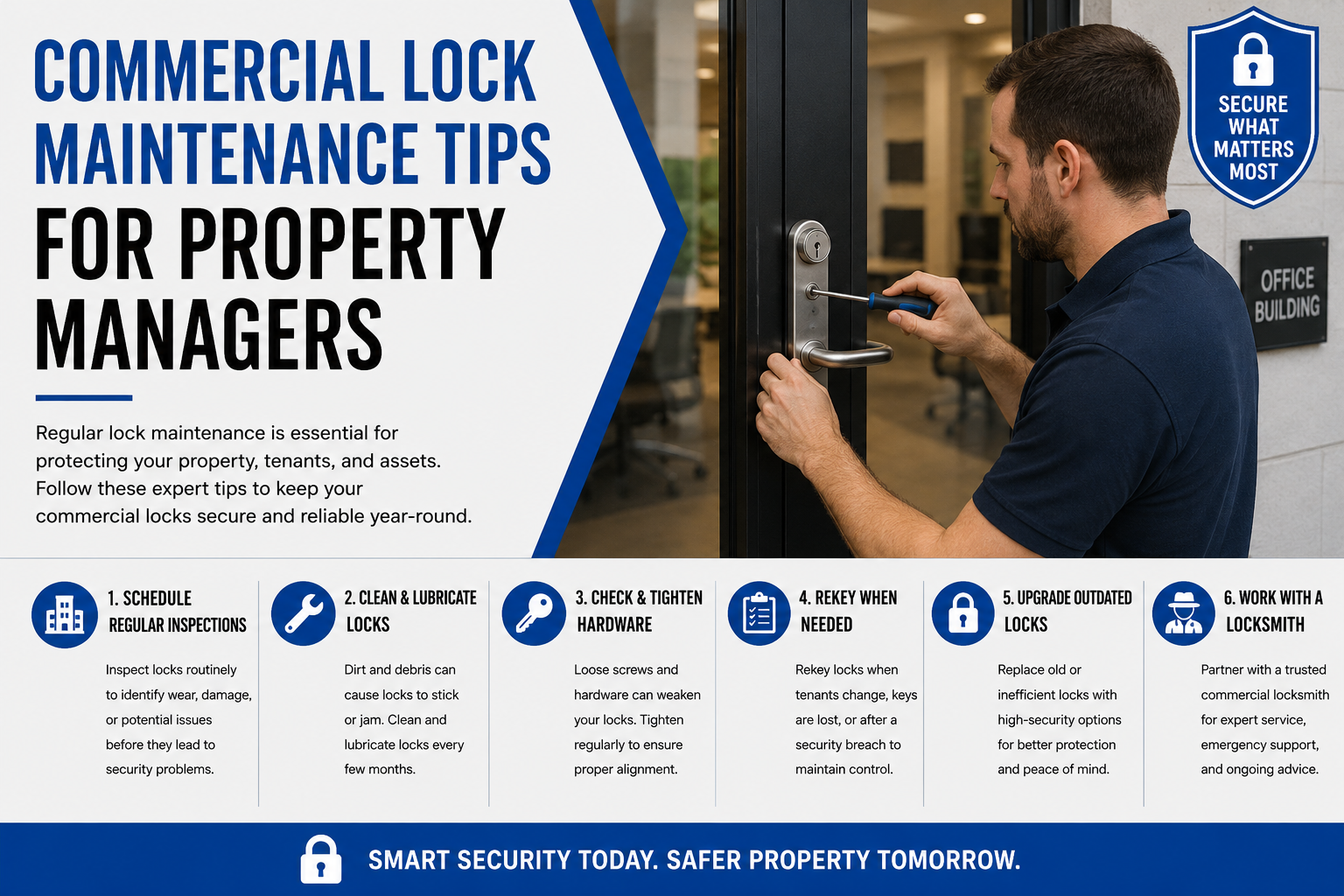
A structured commercial lock maintenance checklist for property managers helps identify problems before they affect building security. Regular inspections, lubrication, hardware checks, and timely repairs extend the lifespan of commercial locks while reducing emergency service calls and unexpected downtime.
Whether your property uses traditional keyed locks, an electronic door lock, a master key system, or an access control system, preventive maintenance should be part of your overall property management security strategy. In this guide, you’ll learn what should be included in a maintenance checklist, how often locks should be inspected, and why working with a professional commercial locksmith helps keep your building secure.
Why Commercial Lock Maintenance Matters
Every commercial property depends on reliable locking systems to control access and protect people and property. A lock that sticks, fails to latch, or no longer secures the door properly creates an unnecessary security risk.
Routine commercial lock maintenance helps ensure every entrance operates smoothly while reducing the chance of unexpected failures. Rather than waiting until a lock breaks, preventive maintenance allows property managers to identify worn components early and schedule repairs before they become urgent.
A properly maintained lock provides several important benefits:
- Improves commercial building security
- Reduces the risk of unauthorized entry
- Extends the life of locking hardware
- Lowers repair and replacement costs
- Improves tenant satisfaction
- Reduces emergency maintenance requests
Commercial locks are exposed to constant use, changing weather conditions, dust, moisture, and daily wear. Over time, these factors affect the internal mechanism, making locks harder to operate. Regular servicing keeps moving parts clean and functioning correctly while protecting the investment you’ve made in your building’s security.
Routine maintenance also supports compliance with insurance requirements and building safety standards. Many insurers expect commercial properties to maintain secure entry systems as part of their overall risk management program.
What Should Be Included in a Commercial Lock Maintenance Checklist?
An effective commercial lock maintenance checklist for property managers focuses on every component that affects lock performance and security. Rather than waiting for tenants to report problems, property managers should inspect every lock on a scheduled basis.
Inspect Every Commercial Door Lock
Every inspection should begin by checking each commercial door lock individually.
During the inspection, verify that:
- Keys insert smoothly.
- Locks turn without resistance.
- Deadbolts extend fully.
- Latches engage correctly.
- Doors lock and unlock consistently.
- Handles operate properly.
A thorough commercial lock inspection also includes checking for signs of physical damage, rust, loose hardware, or evidence of attempted forced entry.
If a lock feels rough or inconsistent during operation, it could indicate internal wear that requires immediate attention.
Examine Door Hardware
Locks cannot function correctly if surrounding hardware is damaged.
Inspect all door hardware, including:
- Hinges
- Strike plates
- Door closers
- Mounting screws
- Handle assemblies
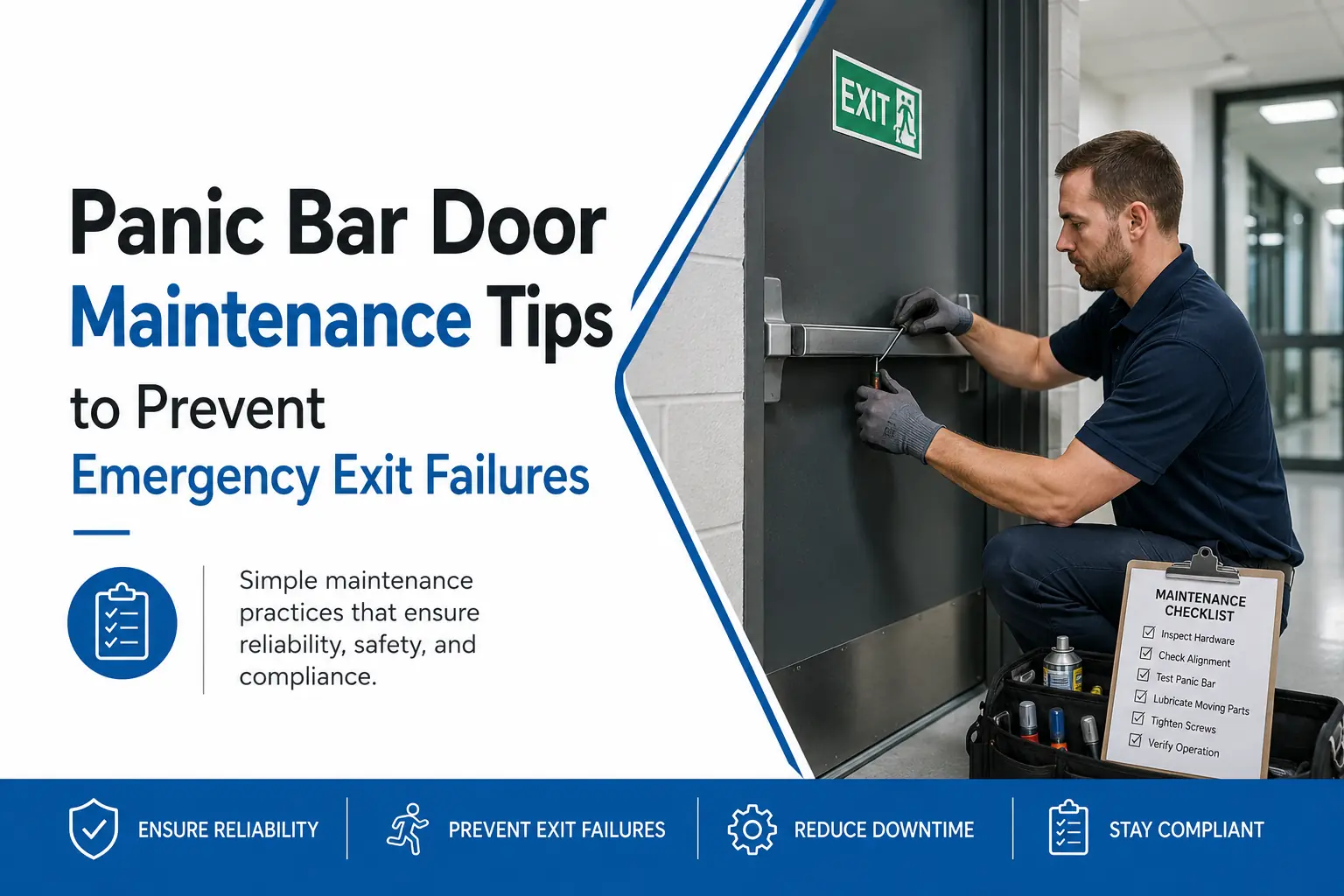
- Panic bars
Loose hinges or misaligned strike plates place unnecessary stress on the locking mechanism. Over time, this causes premature wear and may prevent the door from latching securely.
Property managers should also look for loose door hardware, bent components, or doors that sag due to heavy daily use.
Keeping hardware properly aligned reduces strain on the lock while improving overall building security.
Test Lock Cylinders
The lock cylinder is one of the most important parts of any locking system.
During inspections, test every cylinder for:
- Smooth key insertion
- Easy key removal
- Proper key rotation
- Secure mounting
- Consistent locking performance
A damaged lock cylinder often causes keys to stick or become difficult to turn. Ignoring this issue increases the likelihood of broken keys, lockouts, or complete lock failure.
Replacing worn cylinders before they fail helps prevent costly emergency repairs while maintaining secure access throughout the property.
Lubricate Moving Parts
Proper commercial lock lubrication is one of the simplest and most effective maintenance tasks.
Lubrication reduces friction between internal components, helping locks operate smoothly while minimizing wear.
Focus on lubricating:
- Lock cylinders
- Deadbolts
- Latch assemblies
- Hinges
- Moving hardware
Use lubricants specifically designed for commercial locking systems. Avoid heavy grease or oil that attracts dust and debris, as these products may cause locks to become sticky over time.
Routine lubrication extends the lifespan of your locks while improving everyday performance.
Check Electronic Lock Systems
Many commercial buildings now rely on an electronic door lock or integrated access control system instead of traditional keys.
These systems should be inspected regularly to ensure they continue operating reliably.
Your inspection should include:
- Battery condition
- Card readers
- Keypads
- Door sensors
- Backup power supplies
- Wireless connectivity
- Software updates
Electronic systems provide greater flexibility, but they also require routine maintenance to remain dependable.
If your property uses a master key system alongside electronic access, verify that both systems work together correctly and that access permissions remain accurate for current employees and tenants.
By inspecting electronic and mechanical locks together, property managers create a more complete security strategy while reducing the risk of unexpected failures.
How to Maintain Commercial Door Locks Properly
Knowing how to maintain commercial door locks is just as important as installing quality hardware. Even the best locking systems will wear out faster if they are ignored. A consistent maintenance routine keeps locks operating smoothly, reduces repair costs, and strengthens overall commercial building security.
Property managers should create a regular inspection schedule instead of waiting until tenants report problems. Preventive care not only extends the life of your locks but also helps avoid emergency lockouts and unexpected security issues.
Clean Locks Regularly
Dust, dirt, moisture, and debris can build up inside and around locks over time. This buildup increases friction and may cause keys to stick or locks to become difficult to operate.
As part of your commercial lock maintenance routine:
- Wipe exterior lock surfaces with a soft cloth.
- Remove dust from keyways.
- Clean around handles and strike plates.
- Check for signs of rust or corrosion.
Regular cleaning is especially important for exterior doors that are exposed to rain, humidity, and changing weather conditions. Keeping locks clean helps prevent internal damage and supports long-term performance.
Lubricate Lock Components
Proper commercial lock lubrication reduces wear on moving parts and helps locks operate more smoothly.
Focus on lubricating:
- Lock cylinder
- Deadbolt mechanism
- Keyway
- Latch assembly
- Hinges and moving hardware
Always use a lubricant designed specifically for commercial locks. Heavy oils can attract dust and dirt, which may eventually cause the lock to jam.
Routine lubrication also makes keys easier to insert and remove while reducing stress on internal components.
Tighten Loose Hardware
Frequent door use naturally loosens screws, handles, hinges, and strike plates over time.
Inspect all door hardware for:
- Loose screws
- Misaligned strike plates
- Worn hinges
- Loose door handles
- Damaged mounting brackets
Ignoring loose door hardware places unnecessary strain on the locking mechanism. Even a small alignment issue can prevent the lock from engaging correctly, increasing wear and reducing security.
Checking hardware during every maintenance visit helps prevent larger problems from developing.
Test Keys and Locks
Every lock should be tested during routine inspections.
Verify that:
- Keys insert smoothly.
- Keys turn without resistance.
- Locks engage completely.
- Deadbolts extend fully.
- Doors latch securely.
If employees report that keys occasionally stick or require extra force, investigate the issue immediately. These are often early signs of a worn lock mechanism or a damaged lock cylinder.
Addressing these small issues early helps avoid expensive emergency repairs later.
How Often Should Commercial Locks Be Inspected?
One of the most common questions property managers ask is how often should commercial locks be inspected.
There is no universal schedule because every property experiences different levels of use. However, a structured inspection plan ensures problems are identified before they become security risks.
Monthly Visual Inspections
Monthly inspections are quick but important.
During these inspections:
- Check every entrance.
- Look for visible damage.
- Test lock operation.
- Inspect handles and hinges.
- Confirm doors close and latch correctly.
These simple checks often identify small issues before they become larger repair projects.
Quarterly Functional Testing
Every few months, perform a more detailed commercial lock inspection.
This inspection should include:
- Testing all office door locks
- Inspecting exterior entrances
- Checking emergency exits
- Verifying lock alignment
- Testing electronic credentials
- Inspecting panic hardware
Quarterly inspections provide an opportunity to identify internal wear before complete failure occurs.
They also help maintain a consistent commercial lock maintenance schedule, reducing unexpected service calls throughout the year.
Annual Professional Commercial Lock Inspection
Even if building staff performs regular inspections, every property should schedule a professional inspection at least once each year.
A qualified professional commercial locksmith can:
- Evaluate lock performance.
- Identify hidden wear.
- Inspect internal components.
- Test electronic locking systems.
- Recommend repairs or upgrades.
- Verify overall security.
Professional inspections often uncover problems that aren’t visible during routine maintenance, helping property managers make informed decisions before security is compromised.
Frequently Asked Questions
What should a commercial lock maintenance checklist include?
A commercial lock maintenance checklist should include inspecting locks, testing keys, checking door hardware, lubricating moving parts, examining the lock cylinder, and verifying that electronic locking systems are functioning properly.
How often should commercial locks be inspected?
Property managers should perform monthly visual inspections, quarterly functional checks, and schedule a professional commercial lock inspection at least once a year to maintain reliable security.
How do you maintain commercial door locks?
To maintain commercial door locks, clean them regularly, apply proper commercial lock lubrication, tighten loose hardware, test lock operation, and address minor issues before they become major repairs.
When should commercial locks be repaired or replaced?
Minor problems such as loose hardware or sticking locks can often be repaired. However, locks with a damaged lock cylinder, excessive wear, or recurring failures should be considered for commercial lock replacement.
Why should property managers hire a professional commercial locksmith?
A professional commercial locksmith can perform detailed inspections, identify hidden security issues, recommend upgrades, and provide expert maintenance that helps extend the life of your commercial locking systems.
Conclusion
A proactive commercial lock maintenance plan is one of the best ways to protect your property, tenants, employees, and valuable assets. By following a regular inspection schedule, maintaining lock components, and addressing small issues before they become major problems, property managers can improve security, reduce repair costs, and extend the lifespan of their locking systems. When you need expert inspections, maintenance, or lock upgrades, Dallas Affordable Locksmith LLC can provide reliable commercial locksmith services to help keep your property secure and operating smoothly.