
At Dallas Affordable Locksmith, one of the questions we hear most often is, “Do I really need all-new locks?” Usually, the honest answer is no. If your locks are in good shape and your real concern is who might still have a key, a professional lock rekeying service solves the problem faster and often at a lower cost.
The short answer: Rekey when your locks work smoothly and look sound, but you no longer trust who holds the keys. That includes lost keys, a new home, a former roommate, or a tenant who has moved out. Replace the lock when the hardware is worn, damaged, or not strong enough for your needs. Rekeying changes which key works. Replacing changes the lock itself.
What a Lock Rekeying Service Actually Does
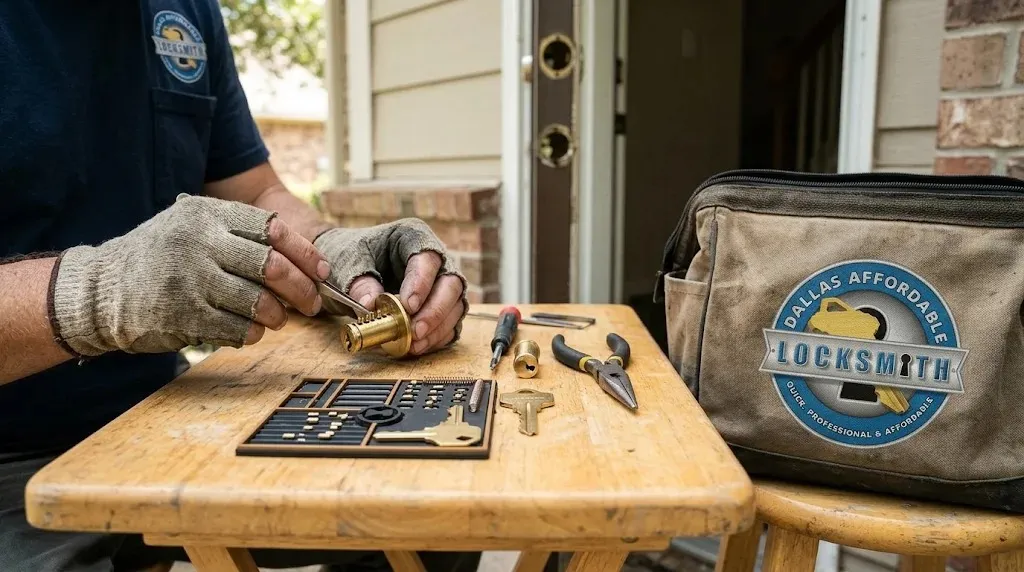
Inside a standard pin tumbler lock, small pins line up with the cuts on your key. Rekeying replaces those pins so the lock works with a brand-new key, and the old keys stop working. The lock stays on the door and looks exactly the same. A locksmith can also set several locks to one key, so a single key opens your front door, back door, and garage entry.
When Rekeying Is the Smart Move
- You just moved in. Previous owners, agents, contractors, and neighbors may still have copies, and you have no way of knowing who.
- A key was lost or stolen. This matters even more if it could be traced to your address.
- Someone moved out. A roommate, ex-partner, adult child, or long-term guest no longer needs access.
- You’re a landlord. Every tenant turnover is a good time to start fresh with new keys.
- Service providers had access. Cleaners, dog walkers, contractors, and caregivers sometimes keep keys long after the job ends.
- You want fewer keys. If your doors use different keys, rekeying can reduce them to one.
- The hardware is in good condition. The key turns smoothly, the lock sits tight in the door, and the finish is solid.
In all of these cases, rekeying is usually the simplest solution, since you get new keys without paying for new hardware.
When Replacement Is the Better Call
- The lock feels loose or wobbly, or the key is hard to turn.
- The hardware shows heavy wear. Texas sun, heat, and storms are tough on exterior finishes and internal parts.
- There is visible damage. Pry marks, a bent latch, or a cracked cylinder after an attempted break-in mean the lock can no longer be trusted.
- The lock is old or basic. A key-in-knob lock with no deadbolt is a weak front-door setup, no matter how new the key is.
- You want an upgrade. A higher-grade deadbolt, keypad, or smart lock requires new hardware.
- The locks can’t be matched. Mixed brands sometimes use different keyways and can’t be rekeyed to share one key.
- You simply want a new look.
One point is worth stressing: rekeying does not make a door stronger. A new key in a weak lock is still a weak lock. Short strike plate screws, a thin door frame, or a worn latch are problems that rekeying does not fix.
A Simple Way to Decide
Ask yourself these questions in order:
- Is the hardware healthy? If it sticks, wobbles, or shows damage, replace it.
- Who might still have access? If there is any doubt, rekey at the very least.
- What are you trying to improve? Rekeying controls who can open the door. Replacement and reinforcement control how hard the door is to force.
Very often, the best answer is a mix of both. Rekey the locks that are in good condition and replace the one weak point, such as an old front deadbolt or a worn back-door knob.
Rekey vs. Replace at a Glance
| Rekey | Replace | |
|---|---|---|
| Best for | Lost keys, new homes, key control | Worn, damaged, or outdated hardware |
| Cost | Usually lower when hardware is good | Varies with lock grade and features |
| Time | Quick | Longer, especially with upgrades |
| Appearance | Stays the same | Can be refreshed |
| Security gain | Controls who has access | Improves the lock itself |
What a Locksmith Checks First
An in-person inspection matters, because the right choice depends on details you can’t see from the sidewalk. We check the brand and keyway, cylinder wear, latch alignment, how far the deadbolt extends, the strike plate and screws, and the condition of the door frame. If your locks are different brands, we’ll tell you which ones can share a key and whether replacing one mismatched lock costs less than replacing them all.
Why This Matters for Dallas Homes
Dallas has older neighborhoods with decades-old hardware, newer builds with basic builder-grade locks, and a large rental market where keys change hands often. Wherever you live, an honest inspection beats guessing. A trustworthy locksmith should tell you when rekeying is enough and when it isn’t. If you’re unsure, a quick lock rekeying service visit is a low-cost way to get a clear answer.
Frequently Asked Questions
Is rekeying cheaper than replacing locks?
Typically, yes, as long as the hardware is in good condition. You’re paying to change the internal pins rather than buy new locks.
How long does rekeying take?
It’s quick. A locksmith can usually handle multiple doors in a single visit.
Can I rekey my locks myself?
Some brands sell rekey kits, but it takes patience and the right tools, and a mistake can leave you with a lock that doesn’t work. Many homeowners prefer to hire a professional.
Will my old keys still work after rekeying?
No, and that’s the point. Once the pins are changed, only the new keys will operate the lock.
Can all my locks use the same key?
Often yes, if they share compatible brands and keyways. A locksmith can inspect them and tell you what’s possible.
Should I rekey or replace after a break-in?
Check for damage first. If the door, frame, or lock was forced, replace and reinforce whatever was damaged. If the hardware is intact but your keys may be compromised, rekeying may be enough.