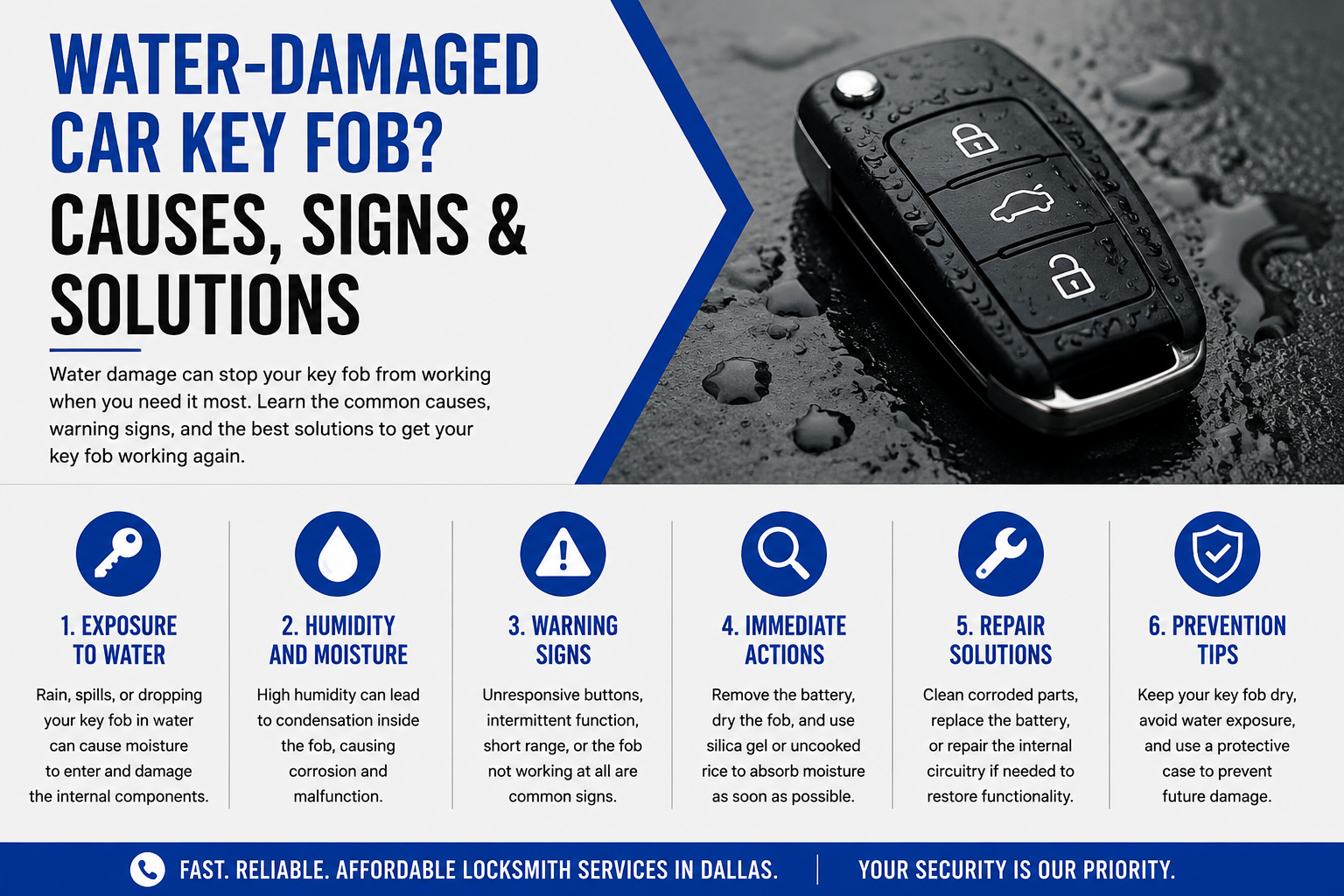

Modern car key fobs make everyday driving more convenient by allowing you to lock, unlock, and even start your vehicle with the push of a button. However, despite their advanced technology, key fobs are not indestructible. One of the most common causes of key fob failure is exposure to water. Whether your key fob falls into a puddle, goes through the washing machine, or gets soaked in heavy rain, moisture can damage the delicate electronic components inside. Understanding Can Water Damage Ruin Your Car Key Fob? helps you take the right steps to protect your key and avoid unexpected lockouts or costly replacements.
When homeowners and drivers experience key fob problems, they often turn to Dallas Affordable Locksmith LLC for professional automotive locksmith services. Experienced locksmiths can inspect damaged key fobs, determine whether they can be repaired or reprogrammed, and provide replacement solutions when necessary. Acting quickly after water exposure often increases the chances of saving the key fob before permanent damage occurs.
If your key fob stops working and you’re unable to access your vehicle, professional Lockout Services Dallas can safely help you regain entry without damaging your vehicle. Emergency locksmiths use specialized tools and techniques to unlock vehicles while minimizing inconvenience, especially when key fob failure occurs unexpectedly.
For more complex issues involving damaged remotes, transponder keys, or key fob programming, Automotive Locksmith Services Dallas provide complete diagnostic, repair, replacement, and programming solutions for a wide variety of vehicle makes and models.
How a Car Key Fob Works
A modern key fob is much more than a simple remote control. Inside the small plastic housing are delicate electronic components, including a microchip, printed circuit board, battery, antenna, and radio transmitter. When you press a button, the fob sends an encrypted wireless signal to your vehicle, allowing it to lock or unlock the doors, open the trunk, activate the panic alarm, or start the engine on vehicles equipped with push-button ignition.
Because these electronic components are sensitive to moisture, even a small amount of water can interfere with their operation if it reaches the internal circuitry.
According to Remote keyless system information, key fobs use radio-frequency communication to securely transmit signals between the remote transmitter and the vehicle’s onboard receiver, making proper electronic function essential for reliable operation.
What Happens When a Key Fob Gets Wet?
Water does not always destroy a key fob immediately, but it can begin damaging the internal electronics within minutes. The amount of damage depends on how much water entered the fob, how long it remained wet, and whether the battery continued supplying power while moisture was inside.
Fresh water may cause less damage than saltwater, sugary drinks, or coffee because these liquids leave behind residue that can corrode electronic components even after the key fob dries.
If moisture reaches the circuit board, it may interrupt electrical connections, damage the microchip, or create corrosion that gradually causes the key fob to stop working.
Signs Your Car Key Fob Has Water Damage
Water damage doesn’t always cause immediate failure. Sometimes the key fob appears to work normally at first before developing problems days later.
Common warning signs include:
- Buttons stop responding consistently.
- Reduced operating range.
- The vehicle no longer recognizes the key.
- Intermittent lock and unlock functions.
- Push-button start fails to detect the key.
- Warning messages appear on the dashboard.
- Visible moisture inside the key fob case.
If you notice any of these symptoms after your key fob has been exposed to water, it’s best to have it inspected before the damage becomes permanent.
What Should You Do Immediately?
Acting quickly can significantly improve the chances of saving your key fob.
The first step is to remove it from the water as quickly as possible. If the battery is removable, carefully take it out to reduce the risk of short circuits while the internal components are still wet.
Next, gently dry the exterior using a clean microfiber cloth. Avoid pressing the buttons repeatedly because doing so may push moisture deeper into the electronics.
Allow the key fob to air dry completely before attempting to use it again. Avoid using excessive heat from hair dryers, ovens, or microwaves because high temperatures can damage plastic components and sensitive electronic circuitry.
If the key fob still does not function after drying, professional inspection is usually the safest solution.
Can a Water-Damaged Key Fob Be Repaired?
In many situations, yes.
If moisture has not severely damaged the internal electronics, a locksmith may be able to clean corrosion, replace the battery, repair damaged components, or reprogram the key fob.
However, if the circuit board has experienced extensive corrosion or electrical failure, replacement may be the only practical option.
A professional diagnostic inspection determines whether repair is possible or if a new key fob will provide a more reliable long-term solution.
When Should You Replace the Key Fob?
Replacement becomes necessary when the internal electronics have been permanently damaged.
Signs that replacement may be required include:
- Complete loss of communication with the vehicle.
- Severe corrosion inside the housing.
- Broken circuit board components.
- Repeated programming failures.
- Water exposure combined with physical damage.
Modern replacement key fobs typically require programming before they will communicate securely with your vehicle.
Professional automotive locksmiths can often complete both replacement and programming more quickly than waiting for dealership service.
Tips to Protect Your Car Key Fob
Preventing water damage is much easier than repairing it later.
Simple habits that help protect your key fob include:
- Keep it away from sinks and swimming pools.
- Avoid leaving it in damp clothing pockets.
- Use a protective silicone key fob cover.
- Store it in a dry location.
- Remove it from clothing before washing.
- Replace weak batteries before they leak.
- Keep a spare programmed key available.
These small precautions help extend the lifespan of your key fob while reducing the likelihood of unexpected lockouts.
Avoid DIY Repairs That Could Make Things Worse
Many online tutorials recommend taking apart a damaged key fob or attempting repairs without proper tools.
While removing the battery is generally appropriate when possible, disassembling delicate electronic components without experience can easily cause additional damage.
Improper cleaning methods, excessive heat, or incorrect reassembly may permanently damage the circuit board, making repair impossible.
Professional locksmiths have the equipment needed to safely inspect, test, repair, and program key fobs without risking further damage.
Many vehicle owners also browse discussions about Car key fob problems and Reddit communities to compare experiences after accidentally exposing their key fobs to water.
Conclusion
So, can water damage ruin your car key fob? The answer is yes. Even a small amount of moisture can interfere with the sensitive electronic components inside the key fob, leading to unreliable performance, communication errors, or complete failure. Acting quickly after water exposure by removing the battery (if possible), allowing the key fob to dry thoroughly, and having it professionally inspected can often prevent minor damage from becoming a costly replacement.
Protecting your key fob is much easier than replacing it. Simple precautions such as keeping it away from water, using a protective cover, and storing it in a safe, dry location can significantly extend its lifespan.
Frequently Asked Questions
Can a wet car key fob still work?
Yes, sometimes. If only a small amount of moisture enters the key fob and it is dried quickly, it may continue working normally. However, hidden corrosion can develop over time, so it’s a good idea to have the key fob inspected if it has been exposed to water.
What should I do immediately after dropping my key fob in water?
Remove the key fob from the water immediately. If the battery can be removed, take it out carefully to reduce the risk of electrical damage. Dry the exterior with a soft cloth and allow the key fob to air dry completely before testing it again. Avoid using excessive heat, as it can damage the electronic components.
Can a locksmith repair a water-damaged key fob?
In many cases, yes. A professional automotive locksmith can inspect the key fob, clean corrosion, replace the battery if necessary, and determine whether the electronics can be repaired or reprogrammed. If the damage is too severe, they can also provide a replacement key fob and programming service.
Will water damage affect my push-button start system?
It can. If the key fob’s internal transmitter is damaged by moisture, the vehicle may no longer recognize the key, preventing features such as remote locking, unlocking, and push-button ignition from functioning properly.