
Few situations are more frustrating than turning your car key only to have it snap inside the ignition. A broken key can leave you stranded, prevent your vehicle from starting, and, if handled incorrectly, lead to expensive ignition repairs. While your first instinct may be to pull the broken piece out immediately, using the wrong tools or applying too much force can make the problem much worse. Understanding What To Do If Your Car Key Breaks Inside the Ignition helps you protect your vehicle while increasing the chances of a simple and affordable repair.
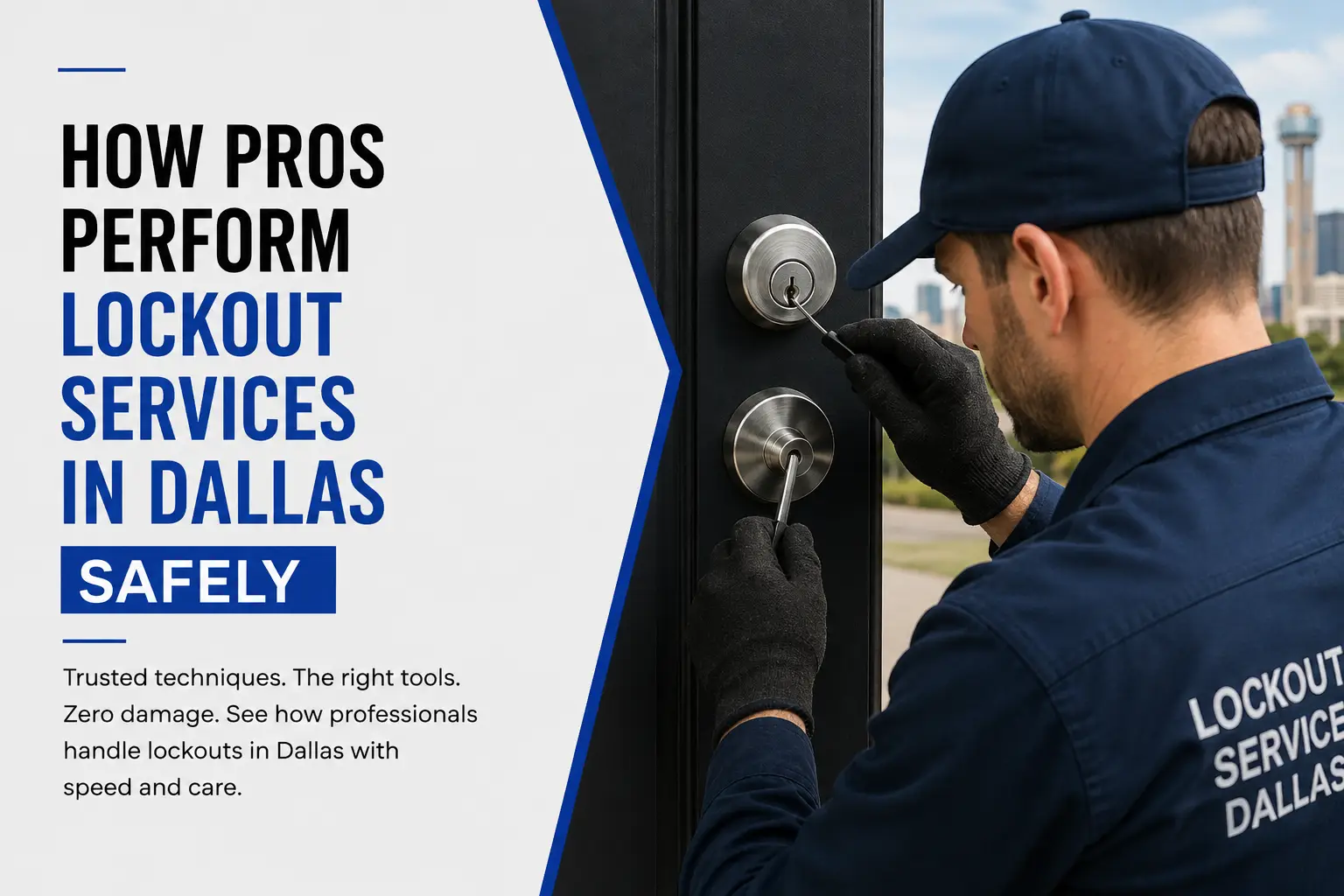
When drivers experience unexpected key problems, many rely on Dallas Affordable Locksmith LLC for fast, professional locksmith services. Experienced automotive locksmiths use specialized extraction tools to remove broken keys safely without damaging the ignition cylinder. They can also cut and program replacement keys when necessary, helping drivers get back on the road quickly.
If you’re stranded because of a broken key or ignition problem, professional Emergency Locksmith Services Dallas provide rapid roadside assistance to safely extract broken keys and restore access to your vehicle. Businesses that depend on secure locks and access systems can also benefit from Commercial Locksmith Services Dallas, while drivers needing replacement car keys, ignition repairs, or key programming can rely on Automotive Locksmith Services Dallas for complete automotive locksmith solutions.
Why Car Keys Break Inside the Ignition
Car keys are subjected to thousands of turns throughout their lifespan. Over time, constant use gradually weakens the metal, making it more likely to crack or snap.
In some cases, the ignition cylinder itself may begin wearing out, creating additional resistance when the key is turned. Dirt, debris, lack of lubrication, or using a bent or damaged key can also increase stress on both the key and the ignition.
Most broken keys result from normal wear rather than sudden failure. Replacing worn keys before they become excessively thin or damaged helps reduce the likelihood of an unexpected break.
According to Ignition system information, the ignition system is responsible for initiating engine operation, making proper maintenance of both the ignition cylinder and key essential for reliable vehicle performance.
Stay Calm and Avoid Forcing the Broken Key
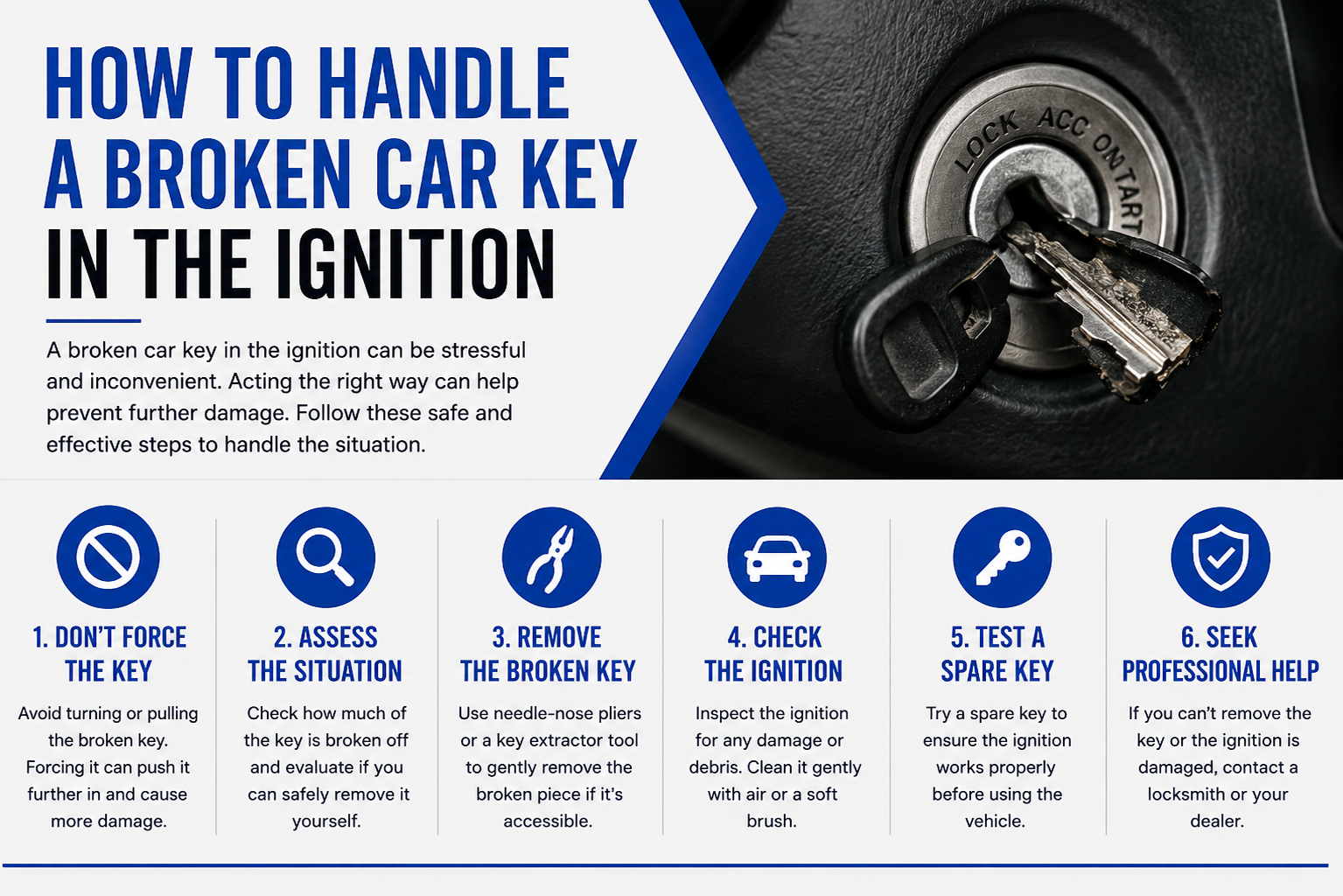
The first and most important step is to avoid turning the ignition or forcing the remaining piece of the key. Applying additional pressure can push the broken fragment deeper into the ignition cylinder, making extraction much more difficult.
If part of the key is still visible, resist the temptation to pull it out using excessive force. Damaging the ignition cylinder could lead to a much more expensive repair than simply removing the broken key.
Remaining calm and avoiding unnecessary movement helps preserve the ignition while improving the chances of a successful key extraction.
Turn Off the Vehicle Completely
If the engine is still running when the key breaks, safely park the vehicle before taking any further action.
Place the transmission in Park (or neutral with the parking brake applied if appropriate) and turn off any electrical accessories. If the broken key prevents the ignition from returning to the proper position, avoid repeatedly attempting to rotate it.
Keeping the ignition stable helps prevent additional stress on the ignition cylinder until professional assistance arrives.
Avoid Using Household Tools
Many people immediately reach for tweezers, screwdrivers, pliers, or wire hooks after a key breaks.
Unfortunately, these tools often create additional problems.
Improper extraction attempts may:
- Push the broken key farther inside.
- Scratch the ignition cylinder.
- Damage internal lock components.
- Bend extraction pathways.
- Make professional removal more difficult.
Using improvised tools often turns a simple extraction into a costly ignition repair.
Can You Remove the Broken Key Yourself?
In some situations, yes.
If a significant portion of the broken key remains outside the ignition, it may be possible to remove it carefully without damaging the lock.
However, if the key has broken completely inside the ignition or cannot be reached easily, attempting further removal usually creates unnecessary risk.
Professional locksmiths use specialized broken-key extraction tools specifically designed to remove damaged keys without harming the ignition cylinder.
Why Professional Key Extraction Is Safer
Automotive locksmiths perform broken key extractions regularly and understand how different ignition systems operate.
Using specialized extraction equipment, they can safely remove broken key fragments while minimizing the risk of damage to surrounding components.
After removing the key, the locksmith also inspects the ignition cylinder to determine whether additional repairs are necessary or whether the ignition remains in good working condition.
If needed, they can also cut and program a replacement key on-site for many vehicle makes and models.
Signs Your Ignition May Also Need Repair
Sometimes the broken key is only part of the problem.
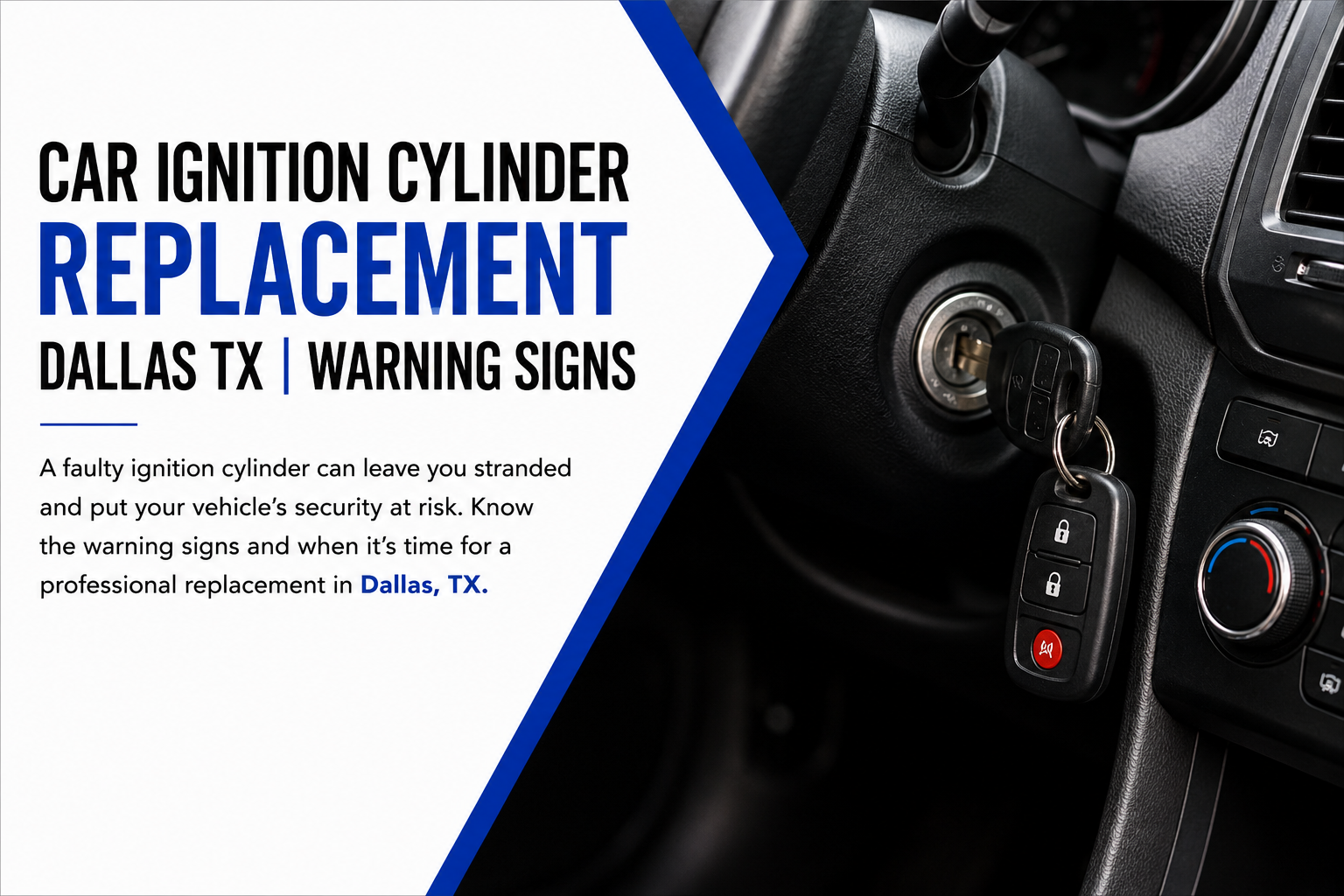
If the ignition cylinder has become worn, damaged, or contaminated with debris, replacing only the key may not completely solve the issue.
Common warning signs include:
- Difficulty turning the key
- Key sticking inside the ignition
- Loose ignition cylinder
- Key requiring excessive force
- Intermittent starting problems
- Ignition failing to return properly
If these symptoms existed before the key broke, the ignition itself should also be professionally inspected.
How to Prevent Keys from Breaking Again
Preventive maintenance is the best way to avoid future key failures.
Simple habits include:
- Replace worn or bent keys promptly.
- Avoid attaching excessive weight to your keychain.
- Keep the ignition clean.
- Don’t force a sticking key.
- Have ignition problems inspected early.
- Keep a spare key available.
These small steps help extend the life of both your keys and your ignition system.
When Should You Call an Emergency Locksmith?
Some situations require immediate professional assistance.
Contact an emergency automotive locksmith if:
- The key is completely stuck inside the ignition.
- The vehicle won’t start.
- The ignition cylinder has been damaged.
- You’re stranded away from home.
- DIY extraction attempts have failed.
- The broken key cannot be reached safely.
Prompt service often prevents additional damage while getting you back on the road much faster.
Many drivers also browse discussions about broken car keys on Quora and Reddit to compare similar experiences before calling for help. While community advice may offer useful insights, professional key extraction remains the safest and most reliable solution for preventing ignition damage and restoring your vehicle’s operation.
Conclusion
Knowing What To Do If Your Car Key Breaks Inside the Ignition can help you avoid unnecessary damage and expensive repairs. The most important thing is to remain calm, avoid forcing the broken key, and resist using household tools that could damage the ignition cylinder. Acting quickly and contacting a qualified automotive locksmith often allows the broken key to be removed safely while preventing additional problems with the ignition system. Regularly replacing worn keys and addressing ignition issues early can also reduce the chances of experiencing the same problem again.
Professional locksmiths have the specialized tools and expertise needed to extract broken keys, repair damaged ignition cylinders, cut replacement keys, and program modern transponder or key fob systems. Whether you’re stranded on the roadside or dealing with a key that has snapped unexpectedly, Dallas Affordable Locksmith LLC provides reliable emergency locksmith and automotive locksmith services to help drivers get back on the road safely and with minimal downtime.
Frequently Asked Questions
What should I do first if my car key breaks in the ignition?
Stop turning the key immediately and avoid trying to force the broken piece out. Applying additional pressure can push the fragment deeper into the ignition cylinder or damage internal components. Contacting a professional automotive locksmith is usually the safest solution.
Can I drive my car if the key is broken inside the ignition?
No. If the key is broken inside the ignition, the vehicle may not start or the ignition may become locked. Attempting to drive or force the ignition can cause additional damage that may require more extensive repairs.
Can a locksmith remove a broken key without replacing the ignition?
Yes. In many cases, an experienced automotive locksmith can safely extract the broken key using specialized tools without damaging the ignition cylinder. If the ignition is still in good condition, replacement is often unnecessary.
Why do car keys break inside the ignition?
Keys commonly break because of normal wear, weakened metal, bent or damaged keys, excessive force, or a worn ignition cylinder that creates additional resistance when turning the key. Regular inspection and replacing worn keys can help prevent this problem.
How can I prevent my car key from breaking again?
Avoid using bent or worn keys, keep your keychain lightweight, don’t force the key if it becomes difficult to turn, and have any ignition problems inspected promptly. Replacing aging keys before they fail is one of the simplest ways to avoid unexpected ignition issues.