
When property owners search for restricted key systems explained, they are usually looking for a way to solve a common security problem: controlling who can access their building and who can copy their keys. Traditional locks often leave businesses, apartment complexes, and homeowners vulnerable because keys can be duplicated without permission. Restricted key systems provide a higher level of security by limiting duplication, strengthening key control, and improving access management throughout a property.
Whether you manage a commercial facility, rental property, educational institution, or private residence, understanding how a restricted key system works can help you make smarter security decisions. At Dallas Affordable Locksmiths, we regularly help customers implement advanced key systems designed to reduce risk while simplifying day-to-day operations.
What Is a Restricted Key System?
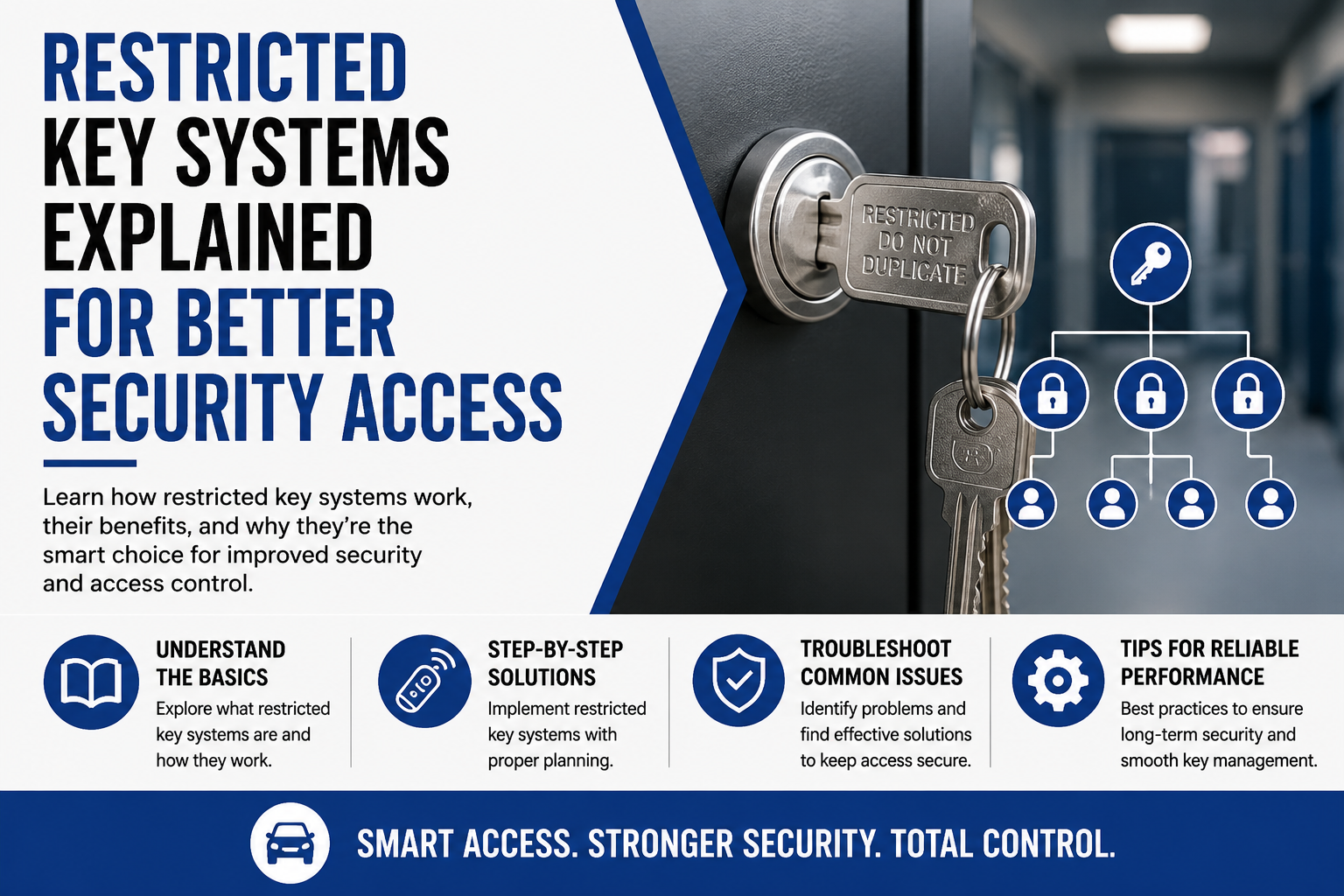
A restricted key system is a specialized locking solution that prevents unauthorized key duplication while creating structured access permissions. Unlike conventional locks that can often be copied at a local hardware store, restricted systems require authorization before additional keys can be produced.
These systems typically utilize:
- Patented key designs
- Restricted keyway configurations
- Controlled key blank distribution
- Advanced lock cylinders
- Documented ownership authorization
- Professional key management procedures
According to overview of lock and key systems, modern lock technologies continue evolving to improve access control and prevent unauthorized duplication, making restricted systems increasingly valuable for security-conscious property owners.
How Restricted Key Systems Work
The foundation of a restricted key system is the restricted keyway. A restricted keyway uses unique key designs that are unavailable to the general public. Because the matching key blank is controlled, ordinary key duplicating services cannot easily reproduce the key.
When a key is cut within a restricted system, authorized procedures must be followed. In many cases, only approved locksmith providers can manufacture replacement keys after verifying ownership credentials.
This creates accountability and helps property owners maintain complete control over the number of keys circulating within their organization.
Key Components of Restricted Systems
- Restricted keys assigned to authorized users
- Patented key technology
- Restricted keyway lock cylinders
- Centralized key management records
- Master key hierarchy options
- Access control integration capabilities
Common Security Problems Restricted Key Systems Solve
Many organizations discover security vulnerabilities only after experiencing unauthorized access. In most cases, uncontrolled key duplication is the root cause.
Common issues include:
- Former employees retaining copies
- Lost keys with unknown exposure risk
- Tenant turnover concerns
- Lack of key accountability
- Unauthorized key duplicating activities
- Difficulty managing multiple lock locations
Businesses concerned about broader security vulnerabilities may also benefit from reviewing our guide on security audits to identify additional weaknesses beyond key control.
Understanding Master Key Systems Within Restricted Key Systems
Many restricted key systems are combined with a master key system. This arrangement allows different users to access designated areas while giving supervisors broader access when necessary.
For example:
- Employees access assigned work areas
- Department managers access multiple sections
- Facility directors use a single master key
- Maintenance personnel receive customized permissions
A properly engineered master key system reduces the number of keys users carry while maintaining strict access control standards.
Research from Penn State Extension’s security resources emphasizes that controlling access credentials remains one of the most effective ways to reduce security risks within organizations.
What Is a Paracentric Key?
A paracentric key is a specially shaped key often used in high-security locking systems. The blade features complex grooves and curves that make lock manipulation more difficult.
Paracentric key technology often appears alongside restricted keyways because both features contribute to a stronger level of security. The complex geometry helps prevent unauthorized tools from easily accessing internal lock components.
DIY Methods Property Owners Often Consider
Before investing in professional solutions, many property owners attempt their own security upgrades.
Common DIY approaches include:
- Rekeying individual locks independently
- Maintaining manual key spreadsheets
- Replacing locks after employee departures
- Installing standard hardware-store locksets
- Creating informal key tracking procedures
Some homeowners also compare rekeying versus lock replacement when evaluating their security options.
Why DIY Key Control Usually Fails
DIY security efforts often fail because the underlying problem is not the lock itself—it is key control.
Even if a property owner installs new locks, unauthorized duplication can continue if the key blank remains publicly available. A copied key may circulate for years without detection.
Other common failures include:
- Incomplete key inventories
- Poor documentation practices
- Untracked employee copies
- Lack of authorization procedures
- Inconsistent access control policies
- No integration with electronic access control systems
Without professional planning, even sophisticated lock hardware can become ineffective if key management is poorly maintained.
How Restricted Key Systems Compare to Electronic Access Control Systems
Many organizations wonder whether they should choose traditional restricted keys or electronic access control systems.
The answer often depends on operational needs.
- Restricted key systems: Lower cost, simple implementation, reliable operation.
- Electronic access control systems: Advanced monitoring, remote credential management, audit trails.
- Hybrid solutions: Combine mechanical key control with electronic access technologies.
The best solution frequently combines both approaches to maximize security while maintaining operational flexibility.
The ASIS International access control resource center highlights the importance of layered security strategies that integrate physical and administrative controls.
Signs You Need a Professional Restricted Key System
Professional assistance becomes necessary when security concerns extend beyond basic lock replacement.
Warning signs include:
- Frequent employee turnover
- Missing keys with unknown location
- Multiple buildings requiring coordinated access
- Unauthorized copies appearing unexpectedly
- Difficulty tracking key holders
- High-value inventory or sensitive information onsite
- Growing compliance requirements
If your organization experiences any of these challenges, a professionally designed restricted key system can dramatically improve accountability and security.
Benefits of Professional Key Management
- Controlled key issuance procedures
- Documented authorization processes
- Reduced unauthorized duplication risk
- Better access control oversight
- Scalable master key system structures
- Improved employee accountability
- Long-term cost savings
Organizations implementing restricted systems often discover that the administrative benefits are just as valuable as the physical security improvements.
Why Choose Dallas Affordable Locksmiths?
Dallas Affordable Locksmiths provides customized security solutions designed around each property’s unique requirements. Our technicians evaluate existing vulnerabilities, identify access control challenges, and recommend practical improvements that support long-term security goals.
Whether you need a commercial master key system, restricted keyway installation, high security keys, or complete key management planning, our team delivers professional guidance and reliable workmanship.
Customers frequently choose our commercial locksmith services because we focus on practical security solutions rather than one-size-fits-all recommendations.
For residential properties, our residential locksmith specialists can help evaluate existing locks and determine whether restricted key systems are appropriate for your home.
Businesses seeking complete security support can also explore our locksmith services for integrated access control and key management solutions.
Frequently Asked Questions
What is a restricted key system?
A restricted key system uses specialized lock cylinders, controlled key blanks, and authorization requirements to prevent unauthorized duplication. These systems improve key control, enhance security, and allow organizations to manage access more effectively while maintaining accountability for every issued key.
How does a restricted keyway work?
A restricted keyway uses a unique key profile unavailable to the public. Because the matching key blank is tightly controlled, standard key duplicating providers cannot legally or practically reproduce the key without proper authorization from the system owner.
Can restricted keys be copied at a hardware store?
In most cases, no. Restricted keys use proprietary designs and controlled blanks that are unavailable through ordinary retail channels. Authorized locksmiths typically require ownership verification before creating replacement keys for restricted systems.
What is the difference between a master key system and a restricted key system?
A master key system determines who can access specific areas using different access levels. A restricted key system focuses on preventing unauthorized duplication. Many organizations combine both systems to achieve stronger security and better operational efficiency.
What is a paracentric key used for?
A paracentric key is commonly used in high-security locking applications. Its uniquely shaped blade increases lock complexity and helps resist unauthorized manipulation, making it a valuable component in advanced security environments and restricted keyway systems.
Are restricted key systems worth the investment?
Yes. For organizations concerned about unauthorized access, employee turnover, or key accountability, restricted key systems provide substantial long-term value. Improved key management and reduced duplication risks often offset the initial investment through enhanced security.
Can restricted key systems integrate with electronic access control?
Absolutely. Many modern facilities combine restricted key systems with electronic access control systems to create layered security. This approach delivers both physical key protection and digital monitoring capabilities for greater operational control.
Conclusion
Understanding restricted key systems explained is essential for anyone serious about controlling access and protecting property. While standard locks provide basic protection, restricted key systems offer a significantly higher level of security through controlled duplication, advanced key management, and structured access control.
If you are concerned about unauthorized key copies, employee turnover, tenant access, or overall security accountability, Dallas Affordable Locksmiths can help evaluate your needs and recommend the right solution. Contact our team today to schedule a professional assessment and learn how a properly designed restricted key system can strengthen security across your property.